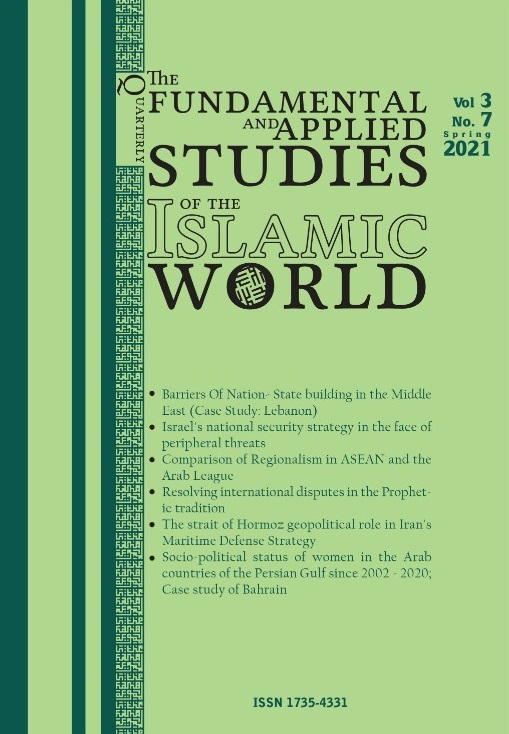
The Red Sea, in contemporary geopolitical developments, is no longer merely a vital corridor for global trade or a maritime space confined to security considerations. Rather, it has evolved into a dynamic and enduring arena of competition among extra-regional powers, where maritime security, access to energy resources, and geopolitical influence are closely intertwined. This study seeks to explain the mechanisms through which the intervention of extra-regional powers contributes to the reproduction of geopolitical insecurity in the Red Sea by addressing the following central research question: How does the intervention of extra-regional powers contribute to the intensification and persistence of geopolitical insecurity in the Red Sea? The research adopts an explanatory–analytical approach and employs a qualitative research design. Data were collected through documentary and, official reports, and analytical documents. The findings indicate that the active and, at times, competing presence of extra-regional powers through military installations, economic partnerships, and maritime diplomacy has altered the region's fragile balance, affecting not only global trade routes but also local security networks and institutional structures. The study further demonstrates that the complex interactions among extra-regional actors, together with the adaptive responses of the littoral states, play a decisive role in shaping the regional security environment. . Overall, the study concludes that the reproduction of geopolitical insecurity in the Red Sea is driven less by the mere presence of extra-regional powers than by the prevailing pattern of strategic competition, the militarization of the region, and the weakness of coordination mechanisms between regional and extra-regional actors.
rezapour, D. & moneem, R. (2026). The Red Sea and the Reproduction of Geopolitical Insecurity in the Light of Interventions by Extra-Regional Powers. (e252097). The Fundamental and Applied Studies of the Islamic World, (), e252097
MLA
rezapour, D., & moneem, R. "The Red Sea and the Reproduction of Geopolitical Insecurity in the Light of Interventions by Extra-Regional Powers" .e252097 , The Fundamental and Applied Studies of the Islamic World, , 2026, e252097.
HARVARD
rezapour D., moneem R. (2026). 'The Red Sea and the Reproduction of Geopolitical Insecurity in the Light of Interventions by Extra-Regional Powers', The Fundamental and Applied Studies of the Islamic World, (), e252097.
CHICAGO
D. rezapour & R. moneem, "The Red Sea and the Reproduction of Geopolitical Insecurity in the Light of Interventions by Extra-Regional Powers," The Fundamental and Applied Studies of the Islamic World, (2026): e252097,
VANCOUVER
rezapour D., moneem R. The Red Sea and the Reproduction of Geopolitical Insecurity in the Light of Interventions by Extra-Regional Powers. The Fundamental and Applied Studies of the Islamic World. 2026;():e252097 (In Persian).